Governors Withdraw From White House Meeting After Invitation Dispute
By Dana Whitfield. Feb 20, 2026
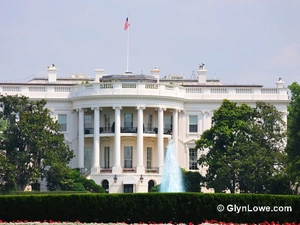
The White House, South Side. Photo by Glyn Lowe Photoworks via Wikimedia Commons. Licensed under CC BY 2.0.
The National Governors Association withdrew from a planned White House meeting after President Donald Trump refused to invite two Democratic governors, fracturing what has long been one of Washington’s most reliably bipartisan traditions.
According to NBC News, Trump said he invited governors from both parties to the gathering - with two notable exceptions: Maryland Gov. Wes Moore and Colorado Gov. Jared Polis. In posts on Truth Social, Trump wrote that invitations went to “ALL governors” except Moore and Polis, calling them “not worthy of being there.”
Within hours, the annual meeting - typically a carefully choreographed display of cross-party cooperation - descended into public confusion and political brinkmanship.
The Posts That Sparked It
Trump’s decision was not delivered quietly. On Truth Social, he not only singled out Moore and Polis but also criticized Oklahoma Republican Gov. Kevin Stitt, who currently chairs the NGA, referring to him as a “RINO” amid the fallout.
The president later wrote that he “invited, not happily, almost all Democrat Governors” to a separate dinner event, further muddying the status of who was welcome - and when. The back-and-forth created uncertainty among governors’ offices and fueled questions about whether the White House was reshaping the guest list in real time.
NBC News reported that NGA officials initially indicated the White House event would include only Republican governors. That departure from precedent quickly triggered alarm among Democratic members.
A Coordinated Response
A group of Democratic governors released a joint statement saying they would not attend White House events if all governors were not invited. The stance effectively turned the issue from a personal snub into an institutional standoff.
The NGA, which has historically prided itself on bipartisan collaboration regardless of which party controls the White House, ultimately withdrew from the meeting. The organization’s annual winter gathering in Washington has traditionally included a session at the executive mansion as a show of cooperative federalism.
Behind the scenes, Stitt attempted to negotiate with Trump to ensure that all governors could attend, according to NBC News. The effort underscored the unusual position of a Republican chair trying to preserve bipartisan norms while navigating a president willing to break them.
Who They Are - And Why It Matters
Wes Moore, a Democrat and Army veteran elected governor of Maryland in 2022, has been viewed as a rising national figure within his party. Jared Polis, the Democratic governor of Colorado, has built a reputation as a business-friendly progressive and vocal advocate on technology and education policy.
Both men have publicly disagreed with Trump on a range of issues. Trump’s decision to exclude them - while publicly declaring them “not worthy” - transformed routine scheduling into a headline-grabbing confrontation.
For governors, the stakes are practical as well as symbolic. NGA meetings often provide rare opportunities to discuss disaster relief, federal funding, infrastructure coordination, and regulatory matters directly with the president and senior administration officials. Being absent from those conversations carries tangible implications for states navigating complex federal relationships.
The Spectacle of Exclusion
At its core, the dispute has a familiar emotional logic: the politics of who gets invited - and who does not. But at the presidential level, exclusion becomes something more than a social slight. It becomes a signal.
Supporters may see Trump’s move as a hardline stance against political adversaries. Critics argue it undermines long-standing norms that governors, regardless of party, should have access to the White House in official capacities.
The episode also reflects a broader pattern in which social media announcements precede - and sometimes reshape - formal institutional processes. By the time clarifications and negotiations occur, the public narrative is already in motion.
What This Moment Reveals
The NGA has weathered partisan swings before, but a wholesale withdrawal over guest lists marks a rare rupture in its bipartisan identity. For an organization founded in 1908 to foster cooperation between states and the federal government, the optics alone are significant.
Trump’s later claim that he invited “almost all” Democratic governors to a separate dinner did little to restore clarity. Instead, it reinforced the sense that this was less a scheduling dispute than a public demonstration of presidential leverage.
The standoff ultimately reached a partial resolution: the White House reversed course and extended invitations to Moore and Polis, who announced they would attend. The NGA, however, declined to formally facilitate the meeting - a meaningful distinction that left the organization’s bipartisan identity visibly strained even as the doors reopened.
In an era when political drama often unfolds in real time online, even the mechanics of an invitation can become a stage. And this week, the governors’ mansion doors in Washington - usually open wide for bipartisan optics - became the setting for a very public reminder that tradition, in 2026, is negotiable.
References: Trump Excludes Democratic Governors Wes Moore and Jared Polis From White House Meeting

The Bold Fact team was assisted by generative AI technology in creating this content
Trending