IIHS Releases 2026 Safest Vehicles List
By Jordan Reyes. Feb 19, 2026
The Insurance Institute for Highway Safety released its latest crash-test results in December 2025, and sixteen vehicles earned Top Safety Pick awards covering 2025 and 2026 model years - results that continue to guide consumer purchasing decisions heading into the new year. The updated ratings follow a fresh series of front, side, and rollover tests, along with tougher standards for rear-seat protection and pedestrian crash prevention.
According to automotive industry coverage of the results, the newest criteria reflect a growing focus on protecting passengers in all seating positions - not just those in the front. The awards also highlight how rapidly safety technology is evolving as automakers respond to real-world crash data.
For drivers, the list offers a practical snapshot of which vehicles currently lead the pack in crashworthiness and collision avoidance.
What Changed in the 2026 Crash Tests
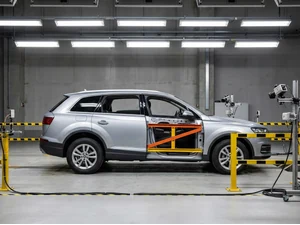
The IIHS has steadily tightened its testing protocols over the past several years, and 2026 marks another step forward. The updated moderate overlap front crash test now places additional emphasis on rear-seat passenger safety, an area researchers say has historically lagged behind front-seat protections.
Side-impact testing also remains a major focus. IIHS strengthened its side crash test in recent cycles by increasing the weight and impact speed of the test barrier to better reflect modern SUVs and trucks on the road. Vehicles must demonstrate strong structural integrity and effective airbag deployment to earn top marks.
Pedestrian crash prevention systems were also evaluated under updated criteria. Advanced automatic emergency braking systems that can detect pedestrians in both daylight and low-light conditions helped several models secure higher ratings.
Here’s a breakdown of the key factors that helped sixteen vehicles earn top honors.
Reinforced Passenger Compartments
Vehicles that performed best showed minimal intrusion into the passenger cabin during front and side impacts. Engineers have increasingly relied on high-strength steel, improved crumple zones, and strategic reinforcement around doors and pillars.
These structural upgrades are designed to absorb crash energy before it reaches occupants. According to crash data research cited in automotive reporting, stronger safety cages significantly reduce the risk of severe injury.
Rear-Seat Protection Improvements
One of the most notable updates this year involved rear-seat safety. In past evaluations, some vehicles that protected front-seat occupants well did not offer the same level of protection in the back.
The new test dummy measurements specifically assess injury risk to rear passengers. Models earning top ratings demonstrated improved seatbelt design, updated airbag positioning, and reduced head and chest injury indicators in rear-seat scenarios.
Advanced Automatic Emergency Braking
Forward collision warning and automatic emergency braking systems played a crucial role in several vehicles qualifying for awards. Systems that can detect vehicles, pedestrians, and cyclists - and respond quickly enough to prevent or reduce impact - scored highest.
Automotive reviewers note that these technologies are increasingly standard rather than optional, signaling a broader industry shift toward proactive crash prevention rather than solely damage mitigation.
Stronger Side-Impact Performance
The revised side-impact test simulates a heavier SUV striking the driver’s side of a vehicle. Top-performing models maintained structural stability and prevented excessive intrusion into occupant space.
Side curtain airbags and improved torso protection systems were also key contributors. As larger vehicles dominate American roads, side-impact performance has become more critical than ever.
Improved Headlight and Visibility Standards
While crash performance remains central, IIHS also factors in headlight effectiveness. Vehicles must provide adequate illumination without excessive glare to earn top recognition.
Clear visibility at night reduces the likelihood of crashes in the first place. This component underscores that safety extends beyond crash survival to crash prevention.
Why These Rankings Matter
Traffic fatalities remain a significant concern nationwide, and safety organizations have increasingly emphasized data-driven vehicle design. The IIHS ratings provide consumers with independent benchmarks that go beyond marketing claims.
Automakers often redesign structural components and software systems in response to test results. In that sense, the annual awards function not only as recognition but also as pressure - encouraging manufacturers to meet higher standards.
Industry analysts say the 2026 results illustrate how safety engineering continues to adapt. As SUVs and electric vehicles grow heavier and more powerful, crash tests evolve to reflect real-world conditions.
Vehicles Earning 2025-2026 Awards
In the latest round, thirteen vehicles earned the higher Top Safety Pick+ designation, recognizing exceptional performance across all test categories:
- Audi A6 Sportback e-tron, Q5, and Q5 Sportback
- Genesis G80
- Honda Passport
- Infiniti QX60
- Kia Sorento
- Lexus NX
- Subaru Forester
- Tesla Cybertruck
- Volkswagen Atlas and Atlas Cross Sport
- Volvo EX90
Three additional vehicles earned the base Top Safety Pick award: the Acura ADX, Hyundai Palisade, and Tesla Model 3.
Notable non-qualifiers in this cycle included the Jeep Gladiator, Mercedes-Benz E-Class, Ram 1500, and Volkswagen Tiguan - vehicles that failed to meet updated criteria in one or more categories, according to IIHS.
A Clearer Roadmap for Buyers
For safety-conscious shoppers, the newest list simplifies what can otherwise be a complex decision. While price, fuel efficiency, and design all factor into vehicle purchases, crash performance remains one of the most consequential considerations.
The 2026 awards suggest that stronger passenger compartments, smarter driver-assist systems, and improved rear-seat protections are no longer niche upgrades. They are becoming expected features in competitive models.
As testing standards continue to rise, future rankings may become even more selective. For now, the sixteen vehicles that earned top marks stand as examples of how far automotive safety technology has come - and how it continues to evolve.
References: IIHS Awards Safety Ratings to Sixteen New Models | 16 Vehicles Qualify for IIHS Crash Test Awards in Latest Round of Testing | Safest Cars to Drive in 2026

The Bold Fact team was assisted by generative AI technology in creating this content
Trending